Anglican Iconography | Christ Enthroned.
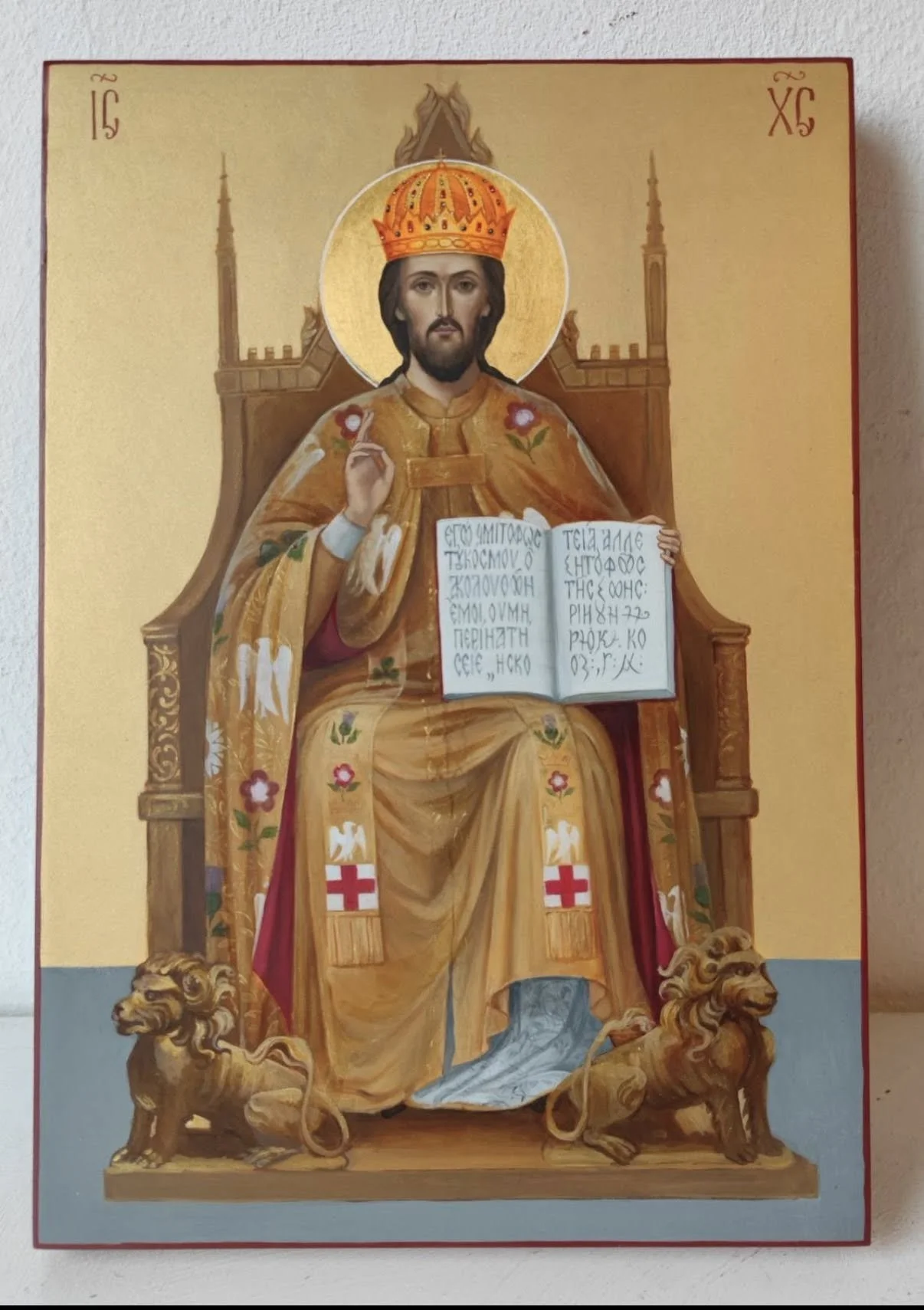
Christ Enthroned.
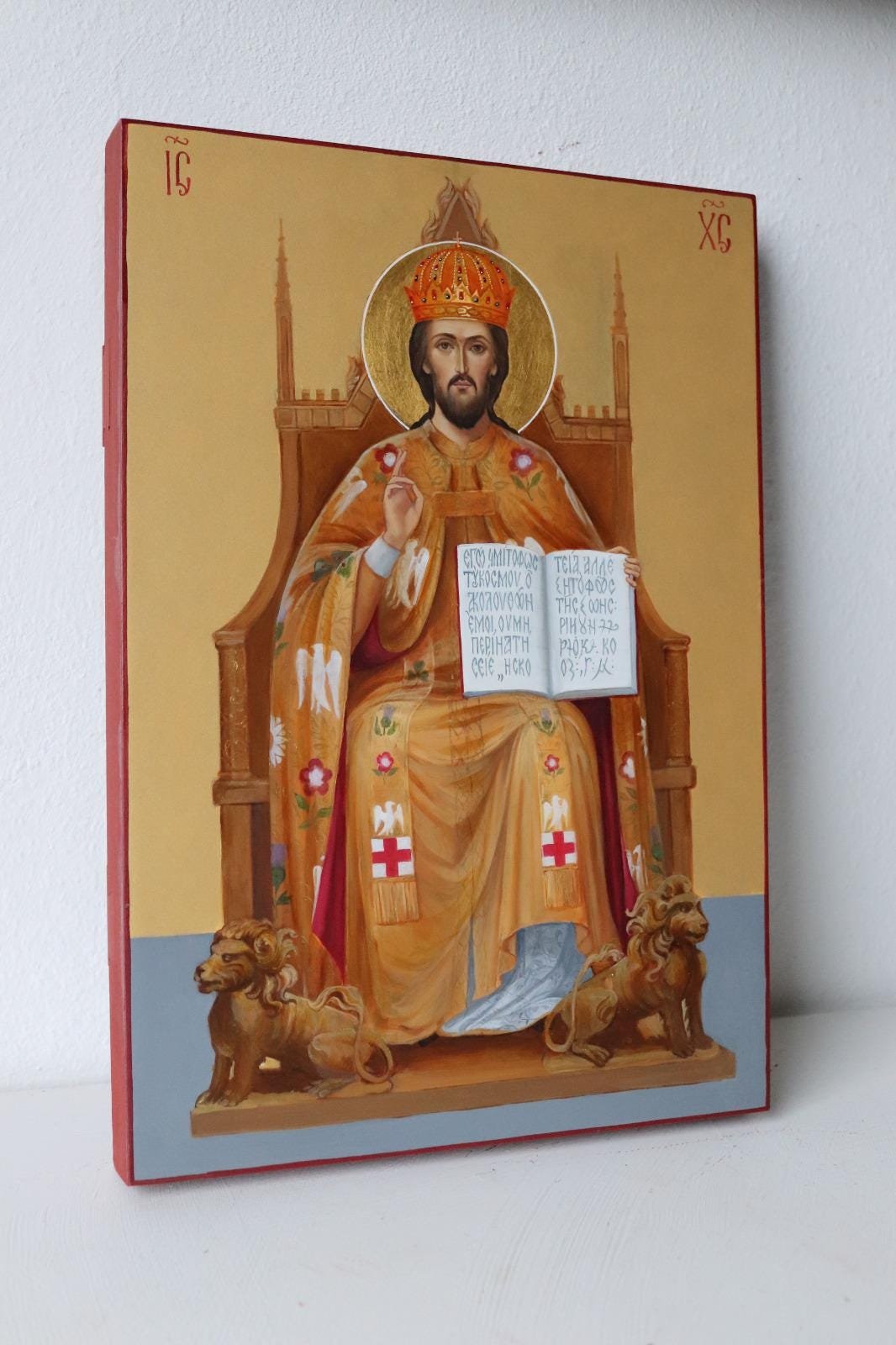
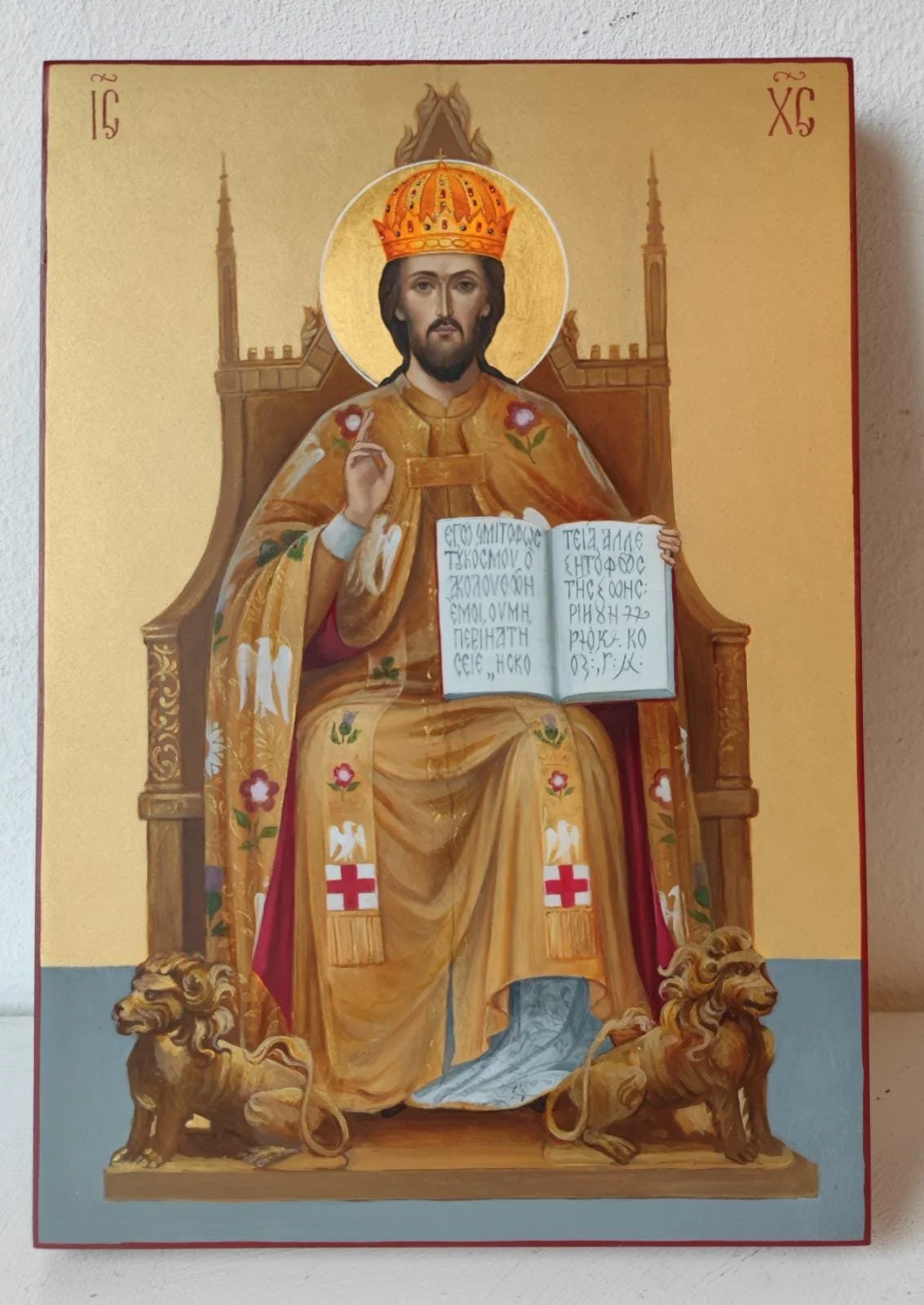
This icon depicts our Lord in English Coronation Robes, enthroned upon St. Edward’s Chair. It was designed by Kunstmalerei Hinz as a companion piece to our parish’s Our Lady of Walsingham icon.
Images of the Blessed Virgin and Child (Seat of Wisdom iconography) enthroned are typically paired with images of our Lord enthroned and the two often sit opposite each other. The former representing the frailty of the humanity Christ assumed from His blessed mother, with the latter depicting Him in kingly glory representing His divine majesty. The question as to what Marian imagery an Anglican parish would commission is quite obvious: Our Lady of Walsingham. There is perhaps no other distinctly Anglican rendering of our Lady other than the Laudian depiction found above the South Porch of the University Church of St. Mary the Virgin – which is by no means as famous. There is a less obvious question for Anglican parishes, however: what is a suitable companion to Our Lady of Walsingham? Surely, an image of Christ enthroned is the ancient precedent, but is there a distinctly Anglican rendering? There are several possibilities, but none unmistakably “Anglican” (which is the point of this whole project). Then the thought occurred to me. If there are distinctly Anglican vestments incorporated into our sacred art, why not our distinctly monarchal wear? That settled it! We would commission an icon of Christ Enthroned as a companion to our Lady’s icon – as is traditionally appropriate – but it would be decidedly English.
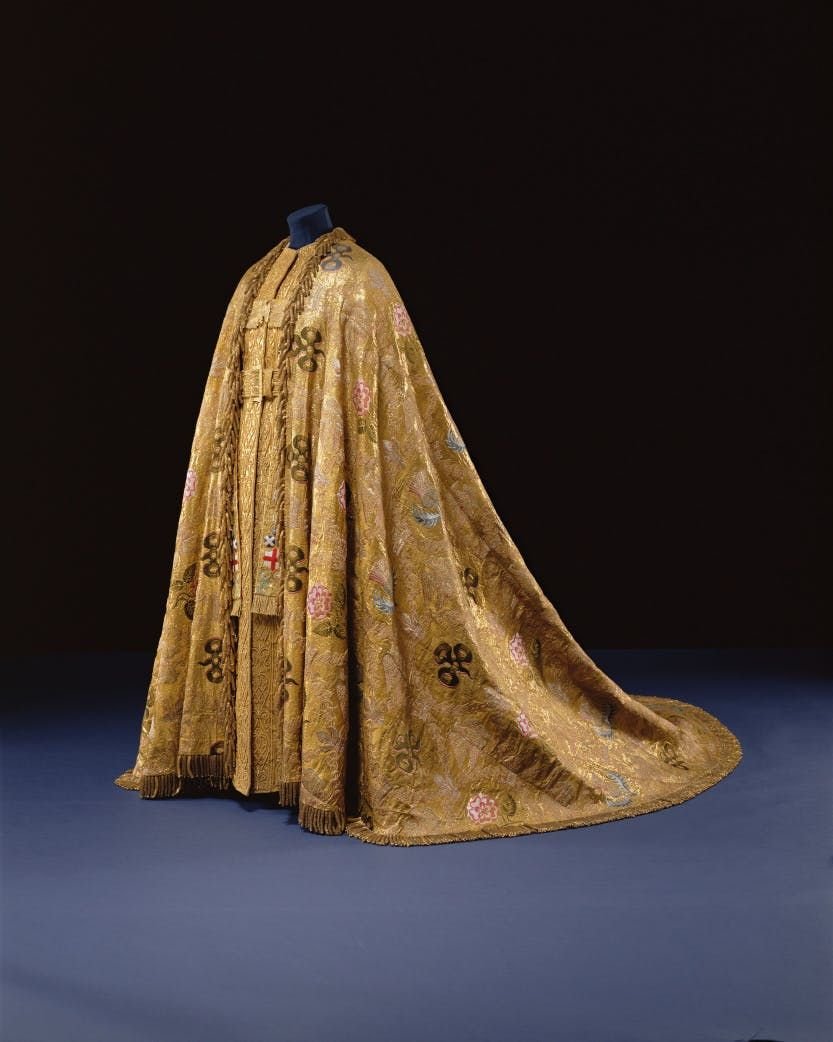
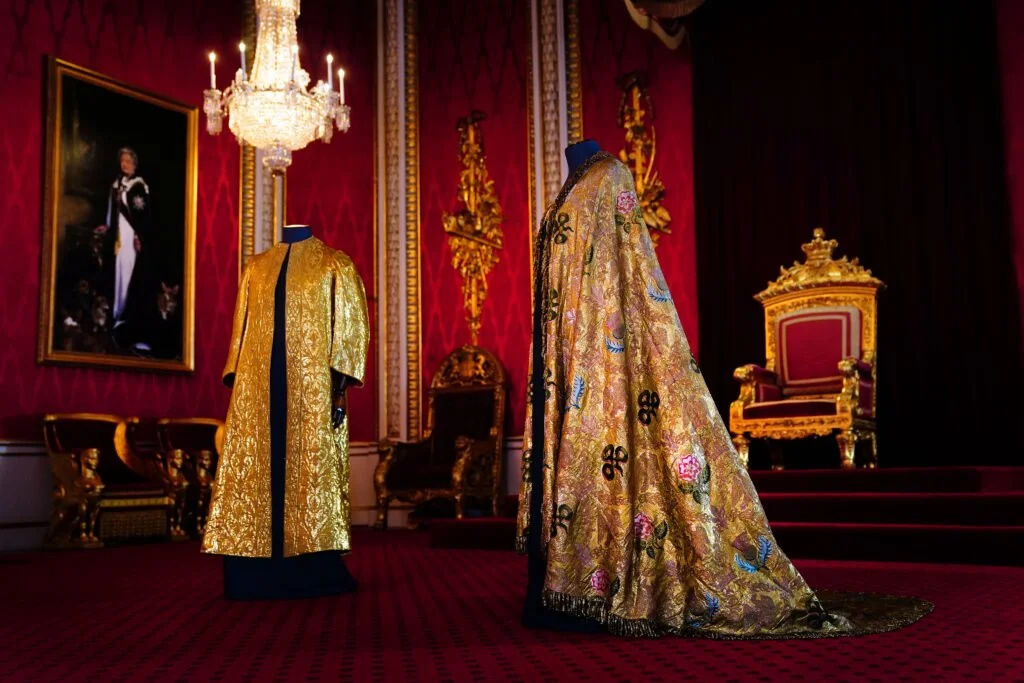
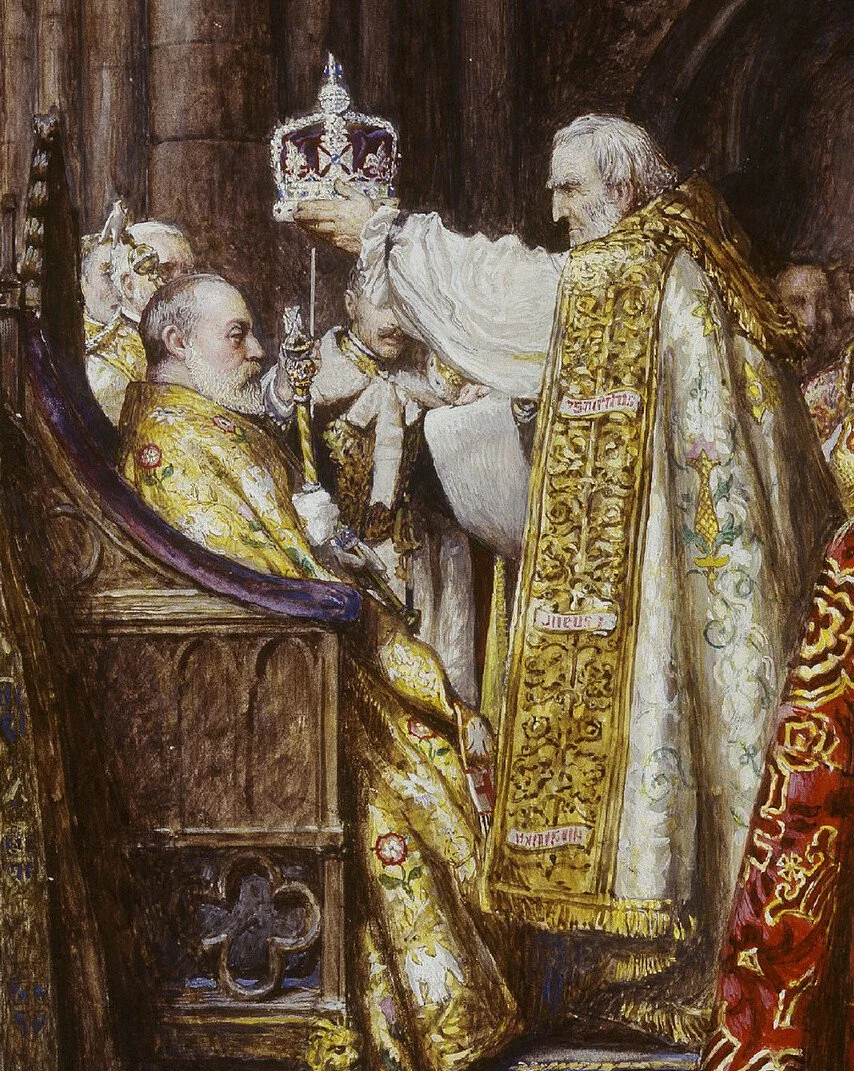
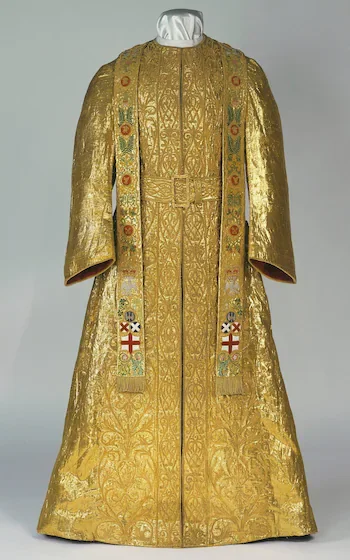
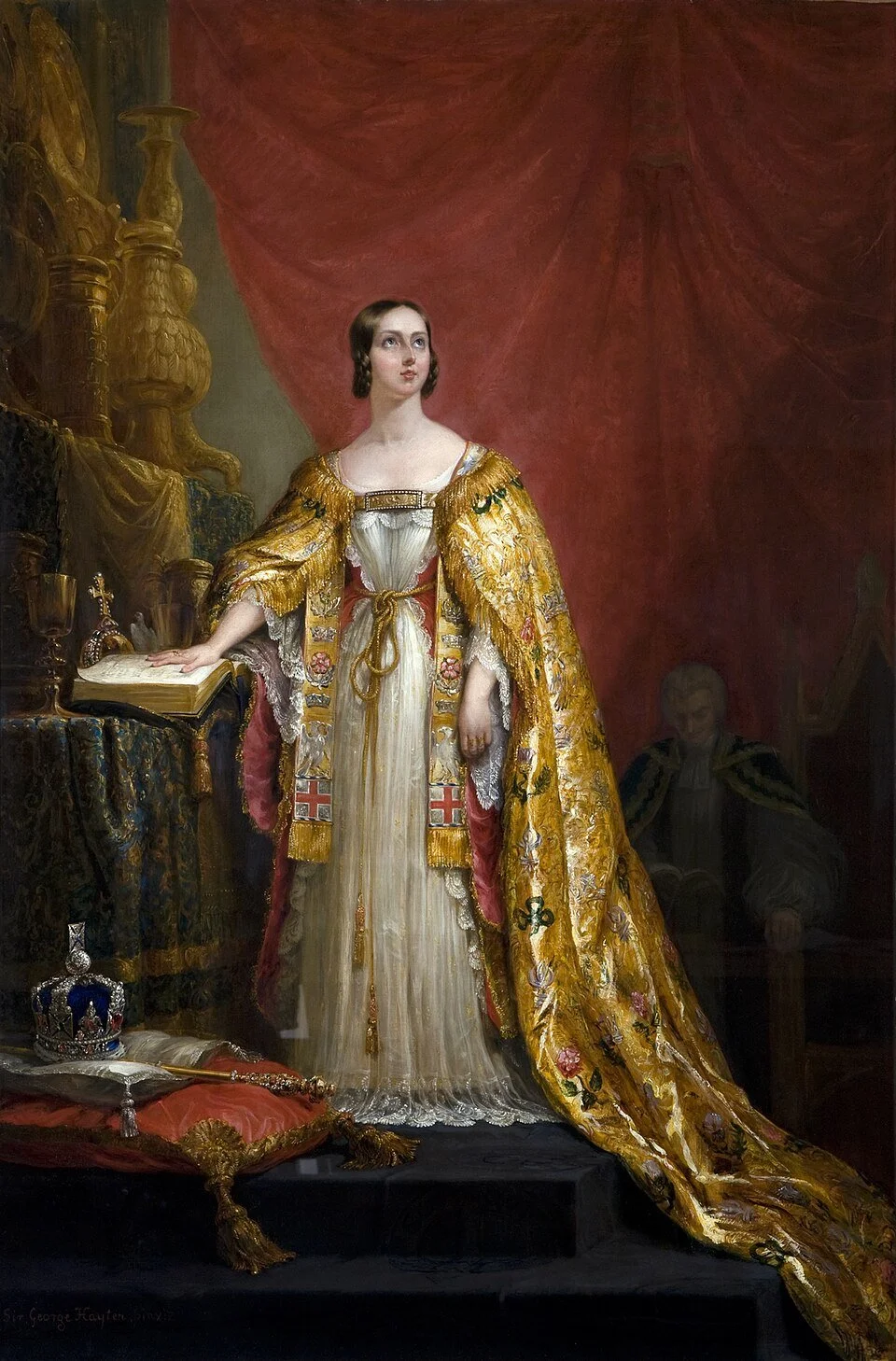
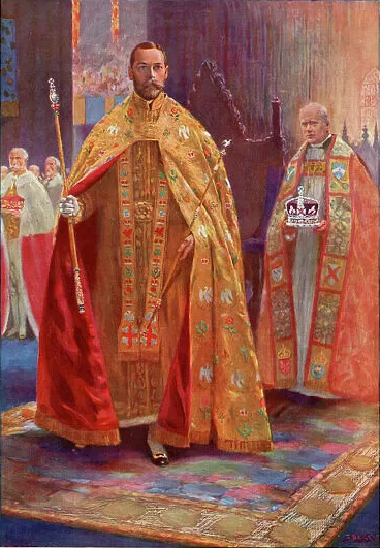
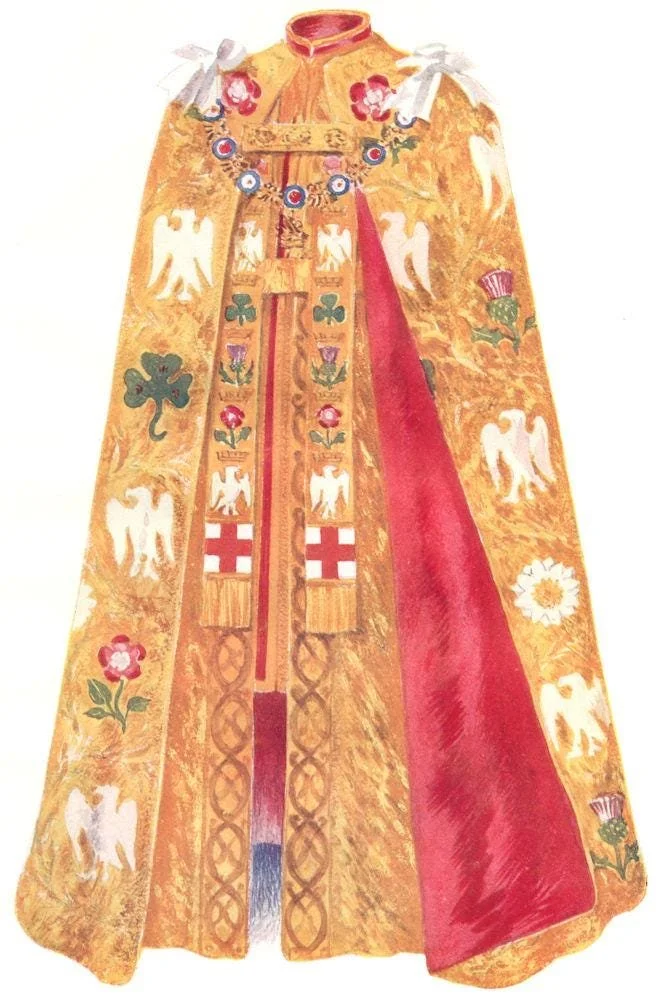
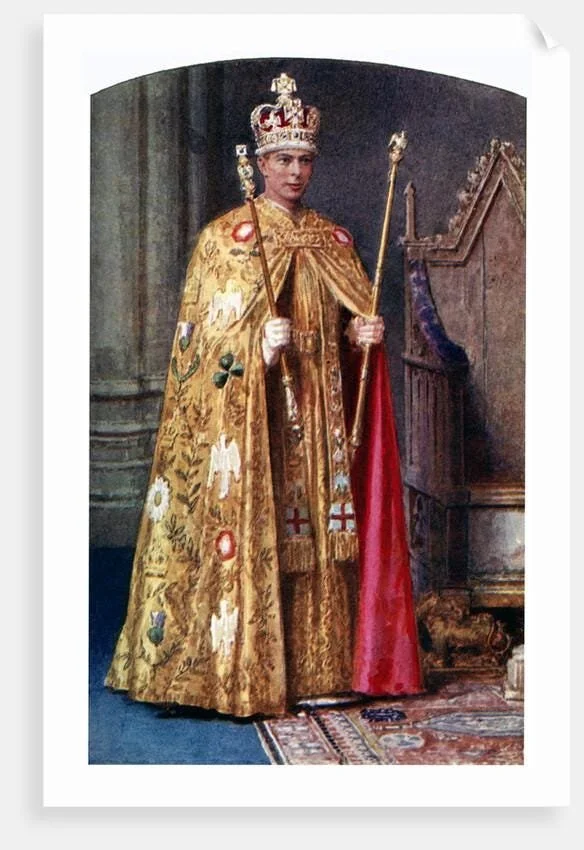
But which robes? There is a point right after the British Monarch’s anointing where the new King or Queen is invested with three sacred garments. These three in particular harken back to the divine nature of monarchy which makes them perfectly suitable for an image of the Divine Monarch. You will notice that the robes themselves resemble – quite intentionally – ecclesiastical vestments. These three garments are:
The Supertunica – essentially, a tunicle as would be worn by a subdeacon.
The Stole Royal – essentially a stole as worn by Eastern subdeacons, and all deacons, priests, and bishops.
The Robe Royal – essentially a cope as worn by certain officiants and the clergy.
I will not comment on the theological significance of these robes or why they were retained throughout the Reformation and Restoration. I will bypass these and instead point out that the supertunica is full and long such as traditional gothic tunicles and lacks the slits, flaps, and flaring of the Italian and French cuts. The stole royal is the narrow cut such as found in medieval depictions of the clergy. And unlike many contemporary copes, the robe royal is opulent and long, reaching well beyond the ankles. Because these three robes are a continuous expression of Anglican sacral vesture, I would argue that they should inform contemporary Anglican vesture – but I digress.
Now that the vesture was safely determined, another question was presented: what of the throne?
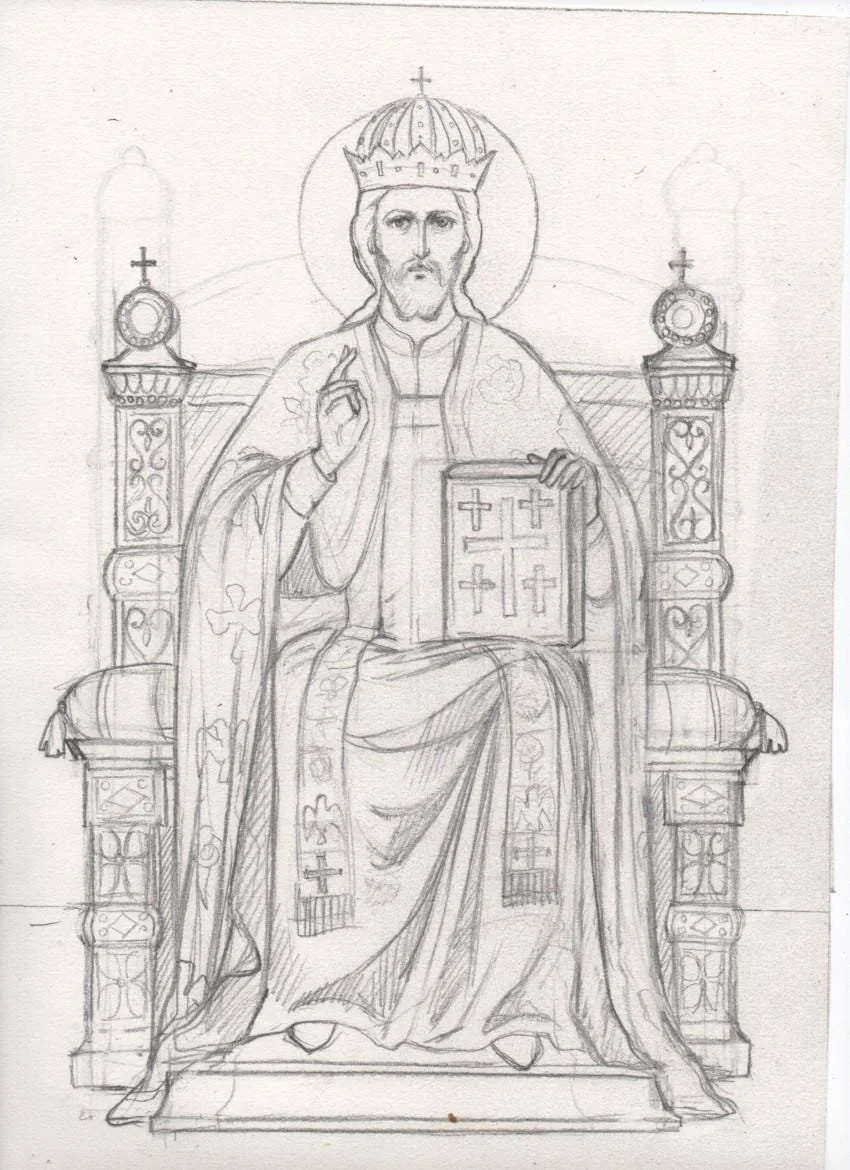
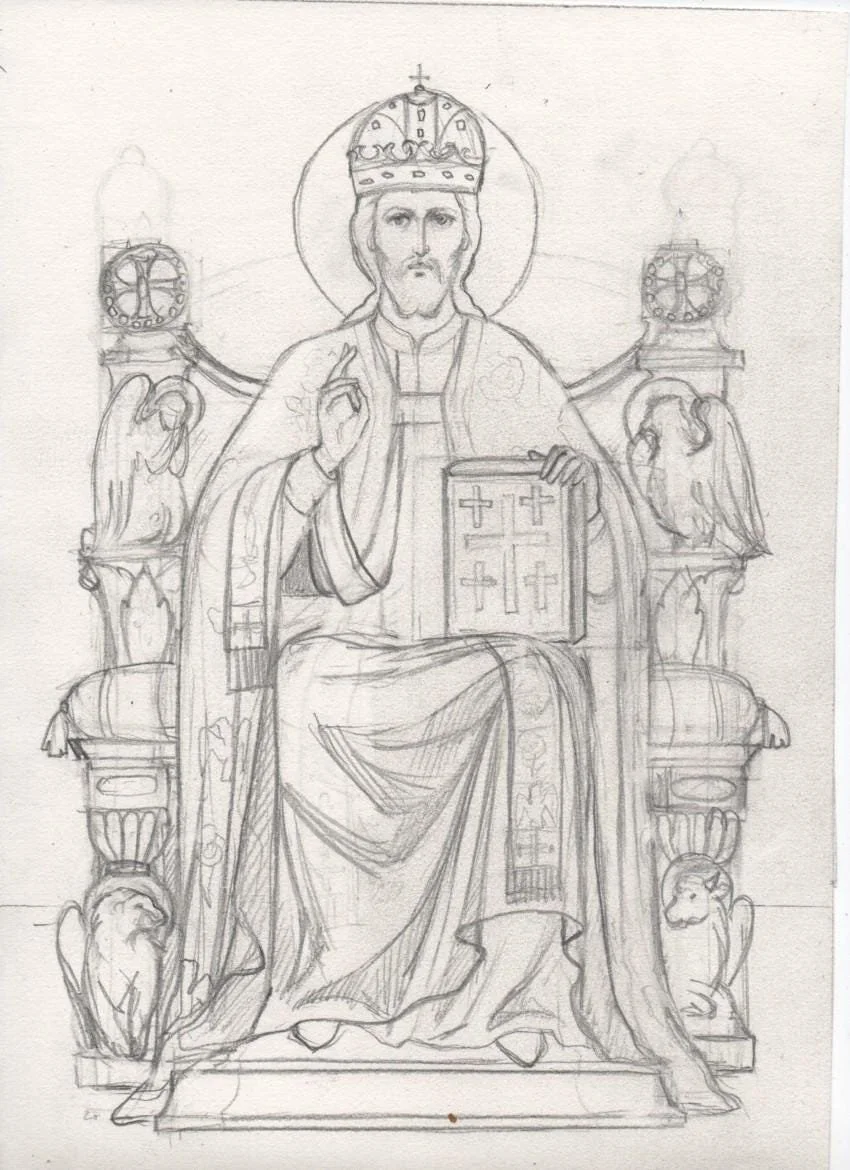
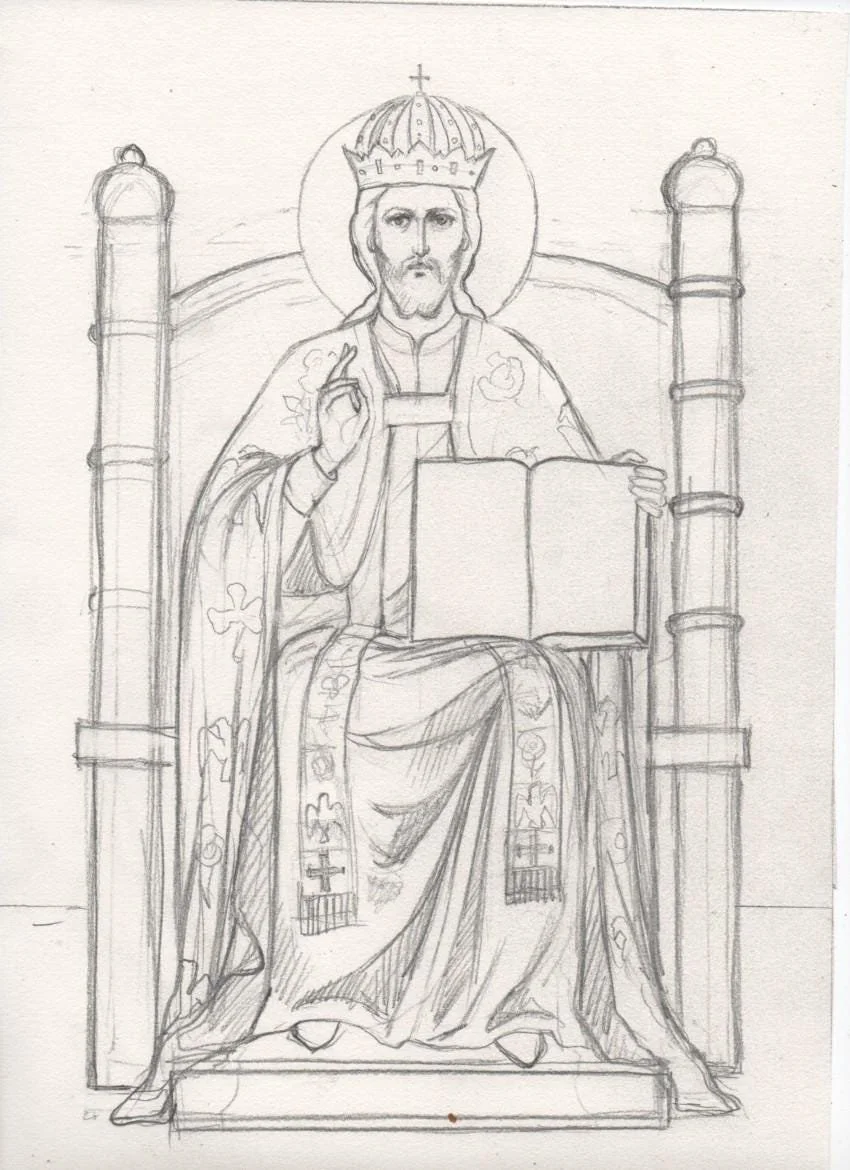
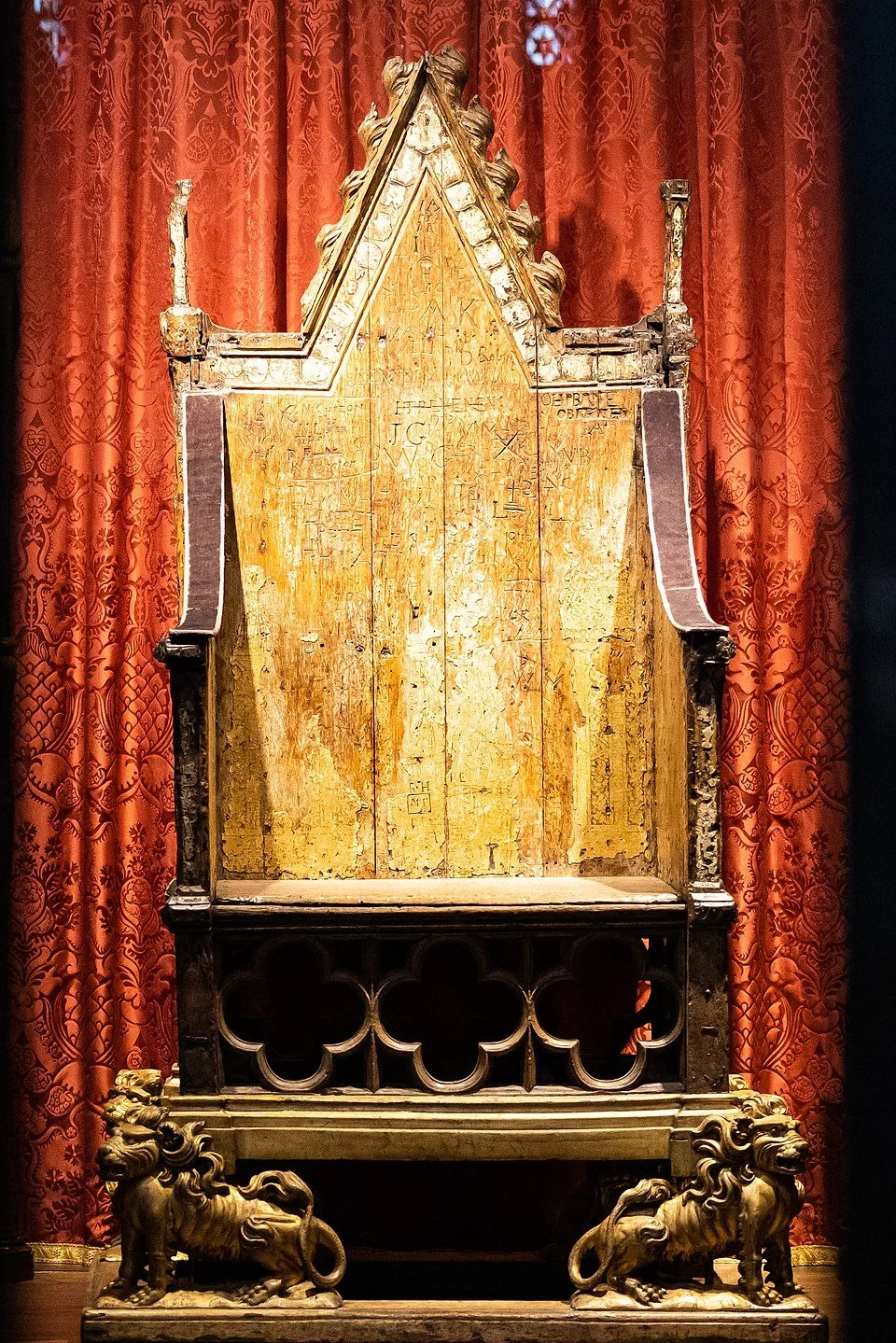
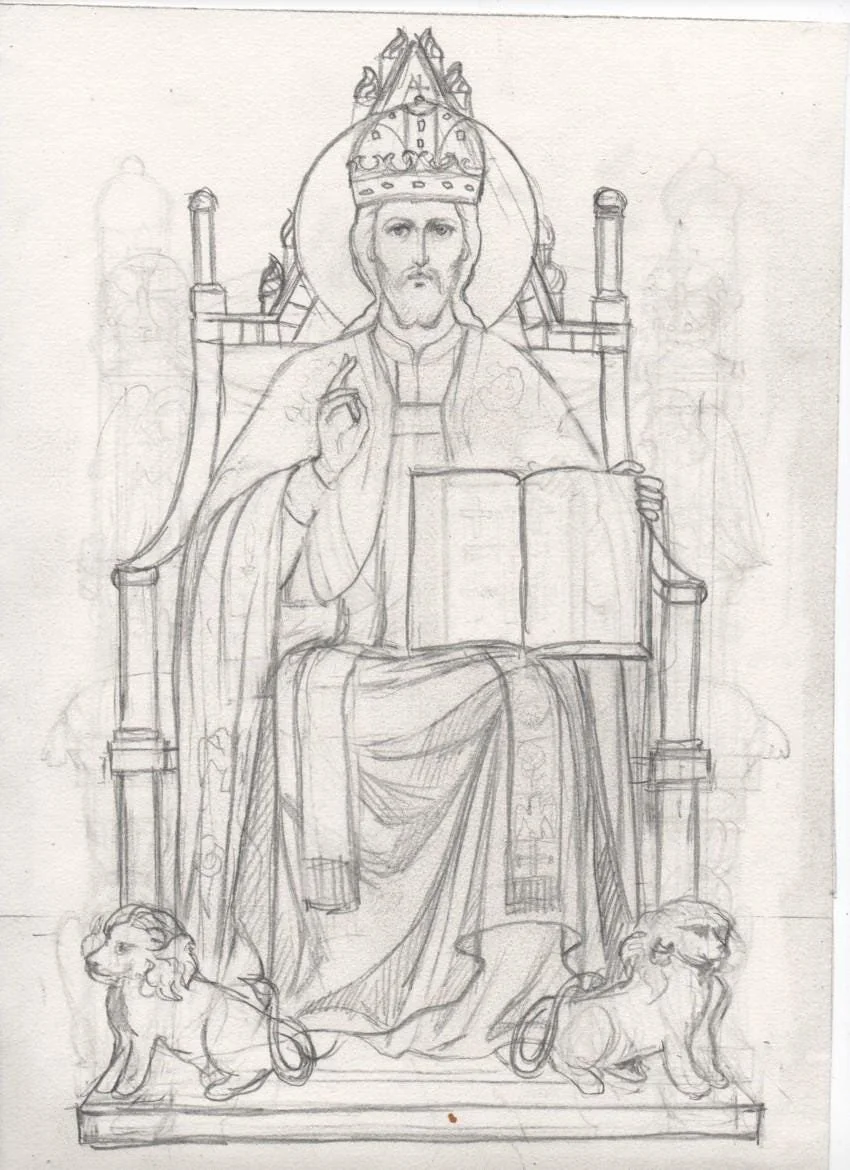
Three sketches were provided by our artist (see above) to pick from. They ranged from classical iconographic depictions to simply a throne matching our Our Lady of Walsingham. While all three were lovely and expertly done, none of them quite fit with what we had in mind. I then began to seek out input from others. The answer came resoundingly from our English and Commonwealth companions: St. Edward’s Chair.
St. Edward’s Chair is the historic throne used for British coronations. It is a wooden chair commissioned in A.D. 1296 by King Edward I to house the the Stone of Scone (“Stone of Destiny”) which had previously been used in Scottish coronations. This beaten and battered chair has been used in the coronation of every British Monarch – Saint and sinner alike – since A.D. 1308. It would make the perfect seat for our Lord, and I know that St. Edward the Confessor (along with St. Henry VI and St. Charles I) would eagerly donate it to His service. It was settled!