
Ritual | Sensory Stations of the Cross - A Guide
A brief introduction to the Stations
The Stations of the Cross — also called the Via Dolorosa (way of sorrow) or Via Crucis (way of the cross) in Latin — is an abiding Lenten devotion of Western Christendom. At one level we might say that the devotion began with the Blessed Virgin herself. Tradition tells us that she followed her Son along the path of His sorrow which ended at Golgotha, and that, as she was wont to do, she “treasured up all these things, pondering them in her heart” (Lk. 2:19, ESV), a tradition we do not dismiss. How could we neglect to stand with her at the sepulcher and weep (cf. John 20:11)? Rather, we commit ourselves to treasuring these things along with her when we chant the Stabat Mater during this devotion. But if that is the biblical and traditional origin, when does the Via Crucis take the devotional form that we recognize today?
It’s hard to say. There is a long history of Christian faithful going on pilgrimage to the Holy Land and visiting sites important to our faith, but since access to Israel waxed and waned with the circumstances of history, reproductions of Holy Land sites began as early as the 6th century to spring up in parishes and parish churches the world over. The Stations of the Cross as we know them is one example, taking recognizable shape midway through the second millennium with English pilgrim William Wey first calling them “stations” in 1462 while writing of his time in Jerusalem, observing pilgrims as they followed Our Lady as she followed Our Lord. The devotion blossomed most fully under the care of 17th century Franciscans who brought the Stations from the Holy Land to other locales, and it was formally established in its 14-station form by Pope Clement XII in 1731. It appears that the 19th century Oxford Divines were responsible for renewing this devotion in the Church of England, and from thence we American Anglicans received it for our use.
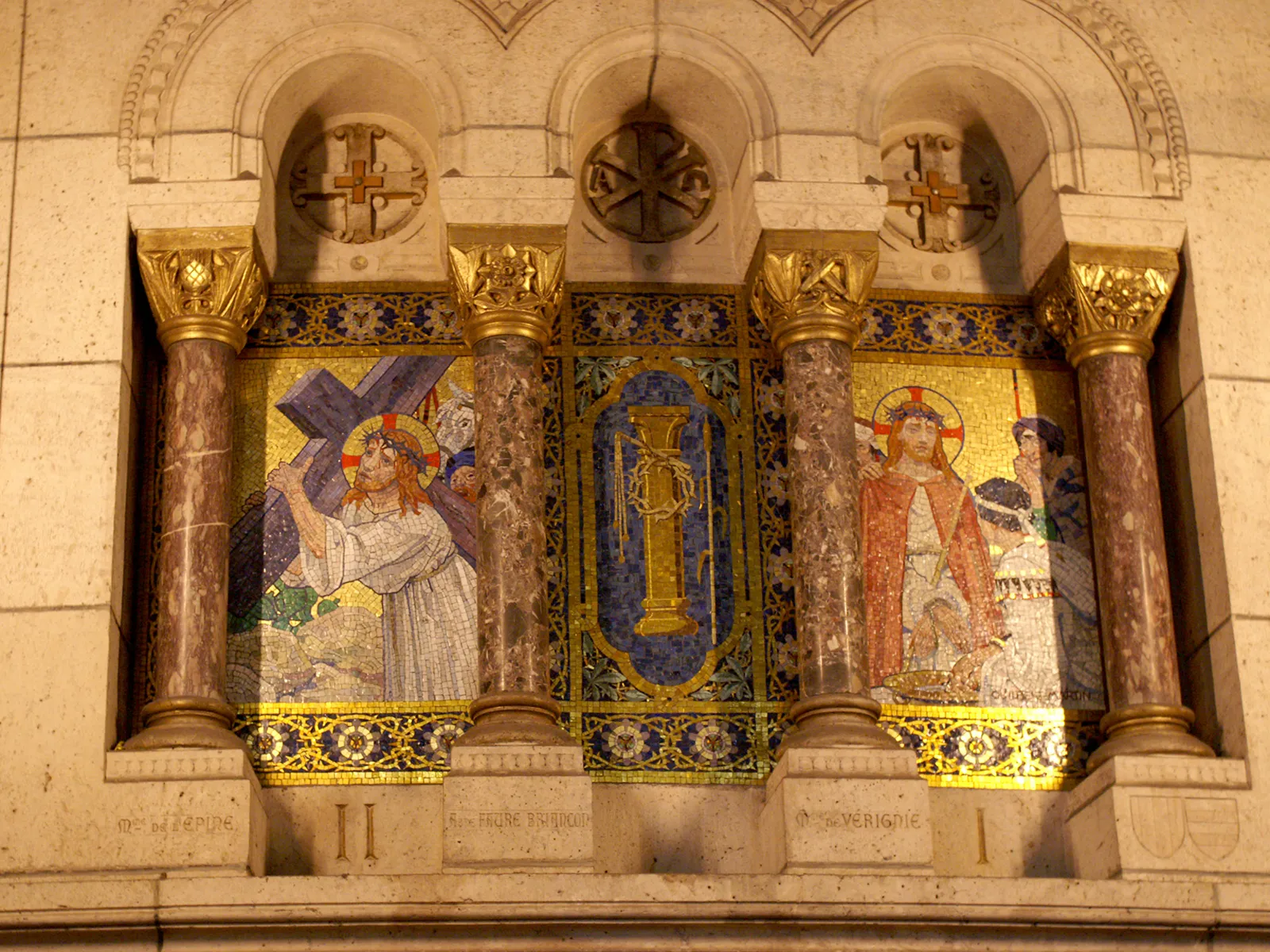
Stations of the Cross, Encyclopædia Britannica. First (right) and Second Stations of the Cross, Sacred Heart Basilica, Paris. Didier B/Sam67fr Creative Commons Attribution ShareAlike 2.5 (Generic)
What about “sensory”?
There is plenty more to be said about its history but this brief introduction of the Stations will have to suffice because my goal in this article is not historical analysis. You will notice that I included “sensory” in the title but haven’t mentioned it until now. What’s that about?
This somber, silent, contemplative devotion is wonderful for those disposed to grim affect and penitential mood, but these don’t readily describe most children. And yet it might be asked: can “most children” be shepherded into the rich fullness of the Stations? Can the Via Dolorosa inspire awe and repentance even in the young? My church, Christ the King Anglican Church in Marietta, GA, thought so. But how? Through their senses.
This will be our third Lent providing a Sensory Stations of the Cross, and although there have been some minor tweaks year over year, the basic structure remains the same. The majority of the Stations are pregnant with textures, scents, smells, and tastes to be drawn out. We have found that through the use of our children’s sense perception, the Spirit of God has granted a deeper appreciation in them for what Our Lord endured out of love for them. I share it with you now in hopes that it might be a blessing to the children (and, through them, to all) in your parish church should the attempt at its use be made.
“…touched with the feeling of our infirmities…”
The Sensory Stations
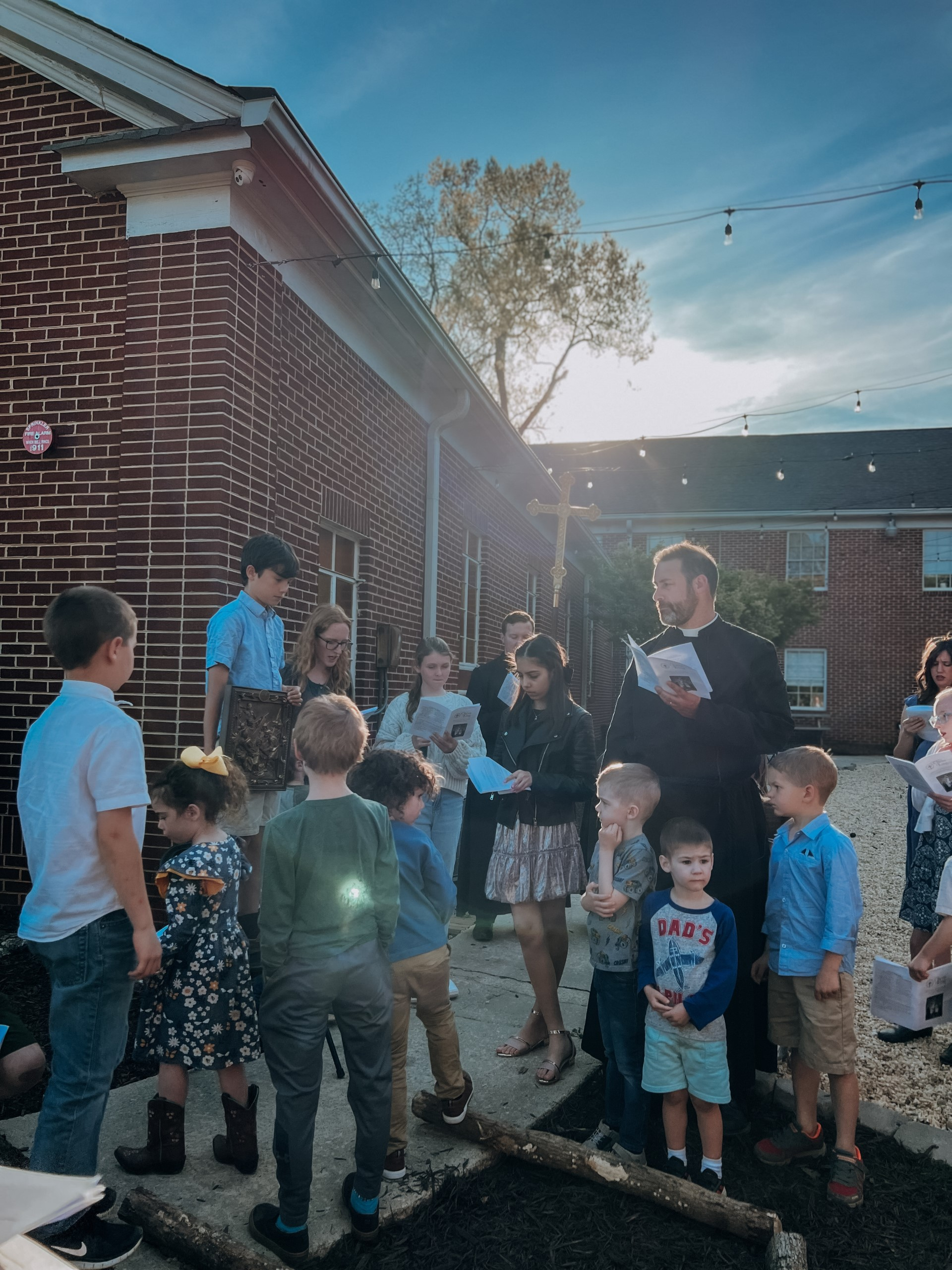
First, you should know that the traditional number of stations was reduced from fourteen to eight (Christ falling happens once, meeting His Mother and the women was removed, etc.). This was more conducive to the sensory experience and the amount of space we had to work with. At each station, the Scripture was read aloud by a pre-selected (and pre-notified) child reader. As Fr. Tony discussed the sensory piece with the children, the adults had prompts in the bulletin for contemplation and prayer. The aim of the whole time was not practical takeaways (Jesus carried His cross, so I can too), but cultivating a love of Jesus (look at how He loves, how He endures, how He humbles himself). We sang the verses of the Stabat Mater between each station as we processed behind the cross.
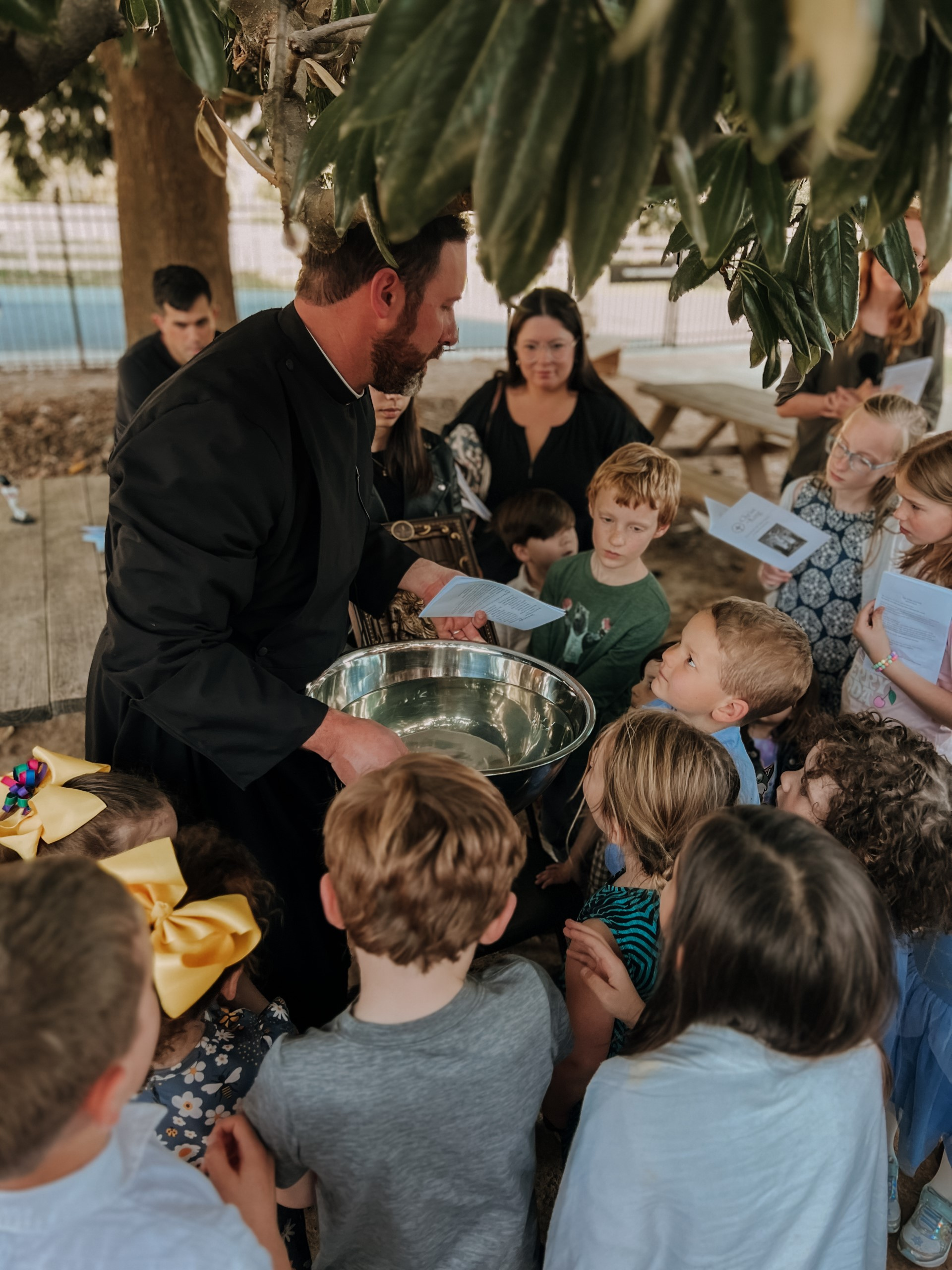
The First Station: Jesus is Condemned to Death
The children washed their hands as Pilate washed his, attempting to clear his guilty conscience and retain his innocence in the matter of Christ's death. There was also a cat-of-nine-tails-like weapon passed around as Fr. Tony described the scourging of Jesus.

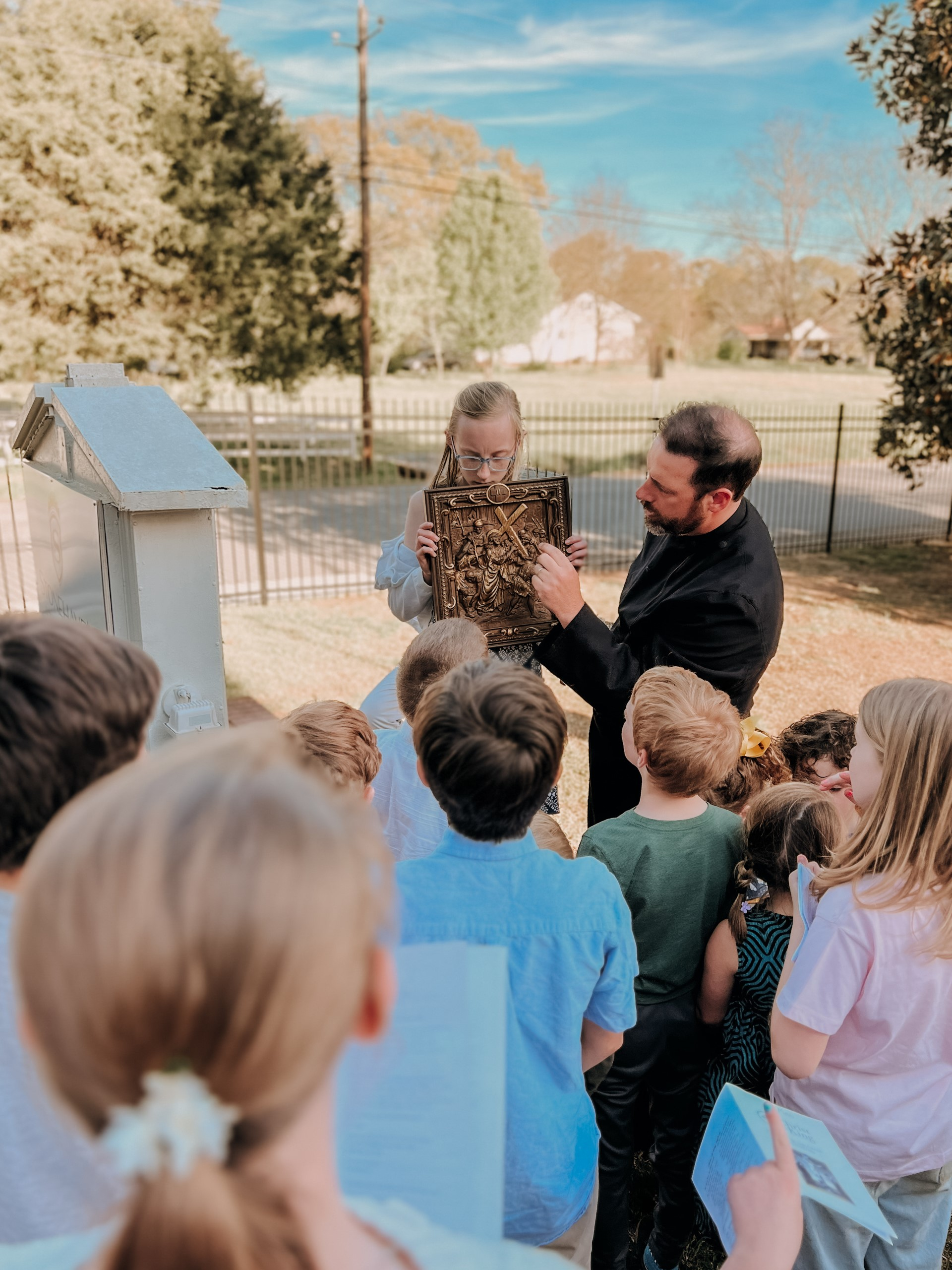
The Second Station: Jesus Takes Up His Cross
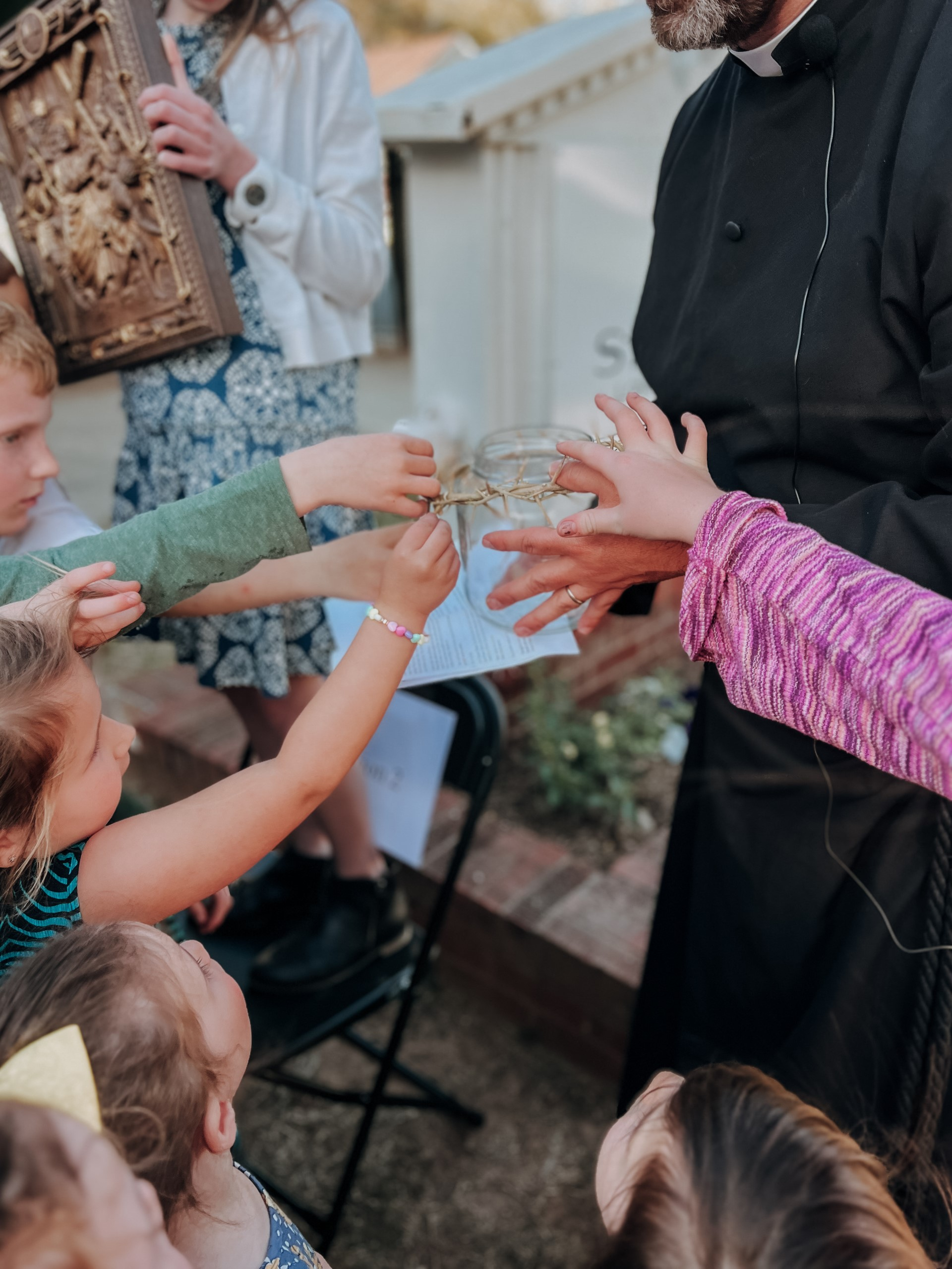
Fr. Tony taught the children about kingly crowns: how any royalty of this world would make for themselves a crown of gold or jewels but how He wore a crown of thorns. A crown made of thorns was carefully passed around so the kids could feel how poke-y it was and imagine how it must have hurt Jesus to have it pushed down into the skin of His head.
The Third Station: Jesus Falls
The children got to touch the surface of unfinished, rough-hewn wood while Fr. Tony painted a picture of what it might have been like for Our Lord to have this wood touching Him, not on unbroken, healthy skin like theirs, but skin torn apart from His scourging.

The Fourth Station: Simon of Cyrene Helps Jesus Carry His Cross
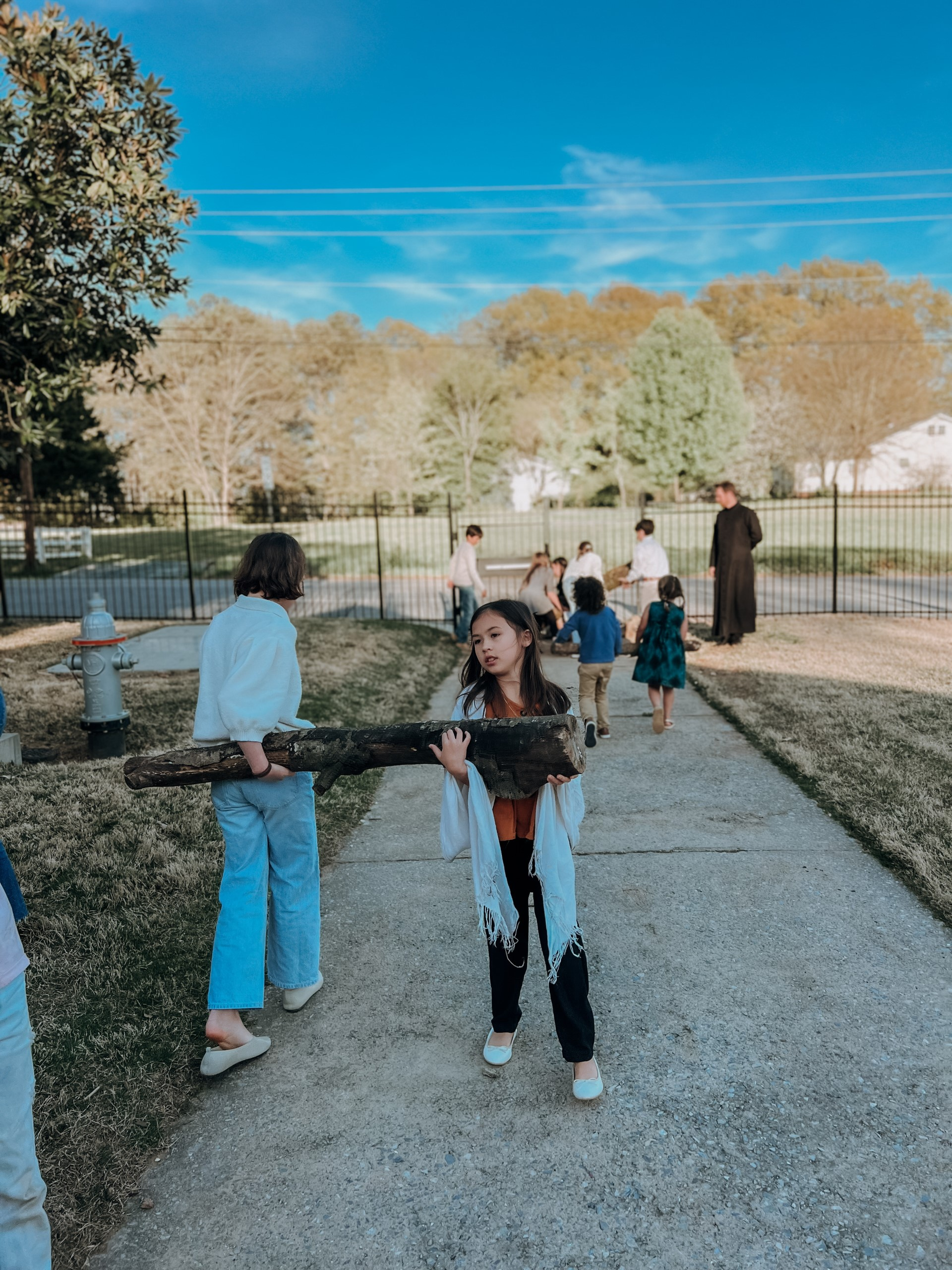
Scattered about were a dozen or so logs, most of them far too big for any one child to carry. After a discussion about the strength of the God of the universe, Fr. Tony asked them to join Him in His human weakness and help one another carry logs from one spot of the property to another. No little fingers or toes were squished in the process! Deo gratias!
The Fifth Station: Jesus is Stripped of His Garments
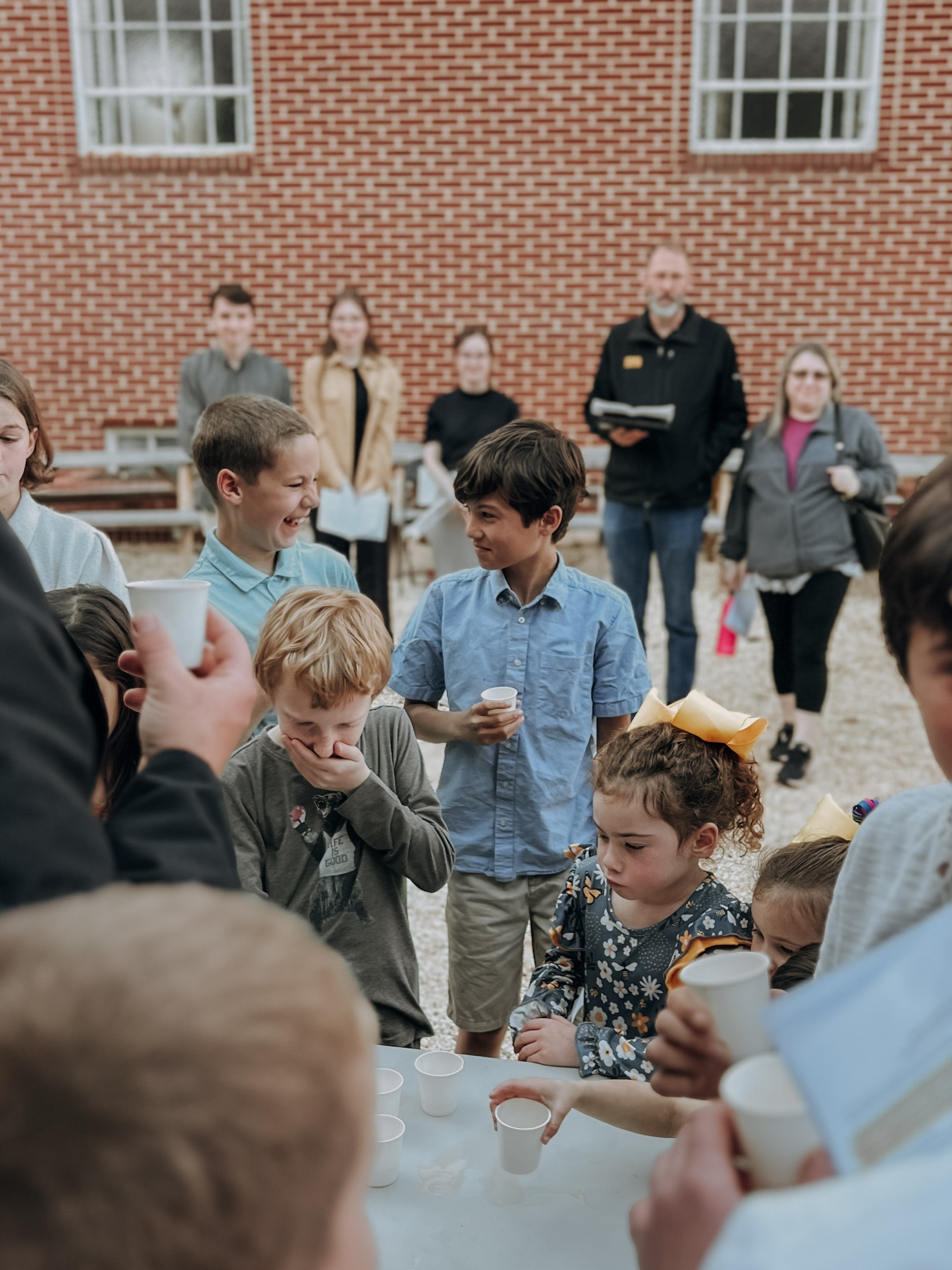
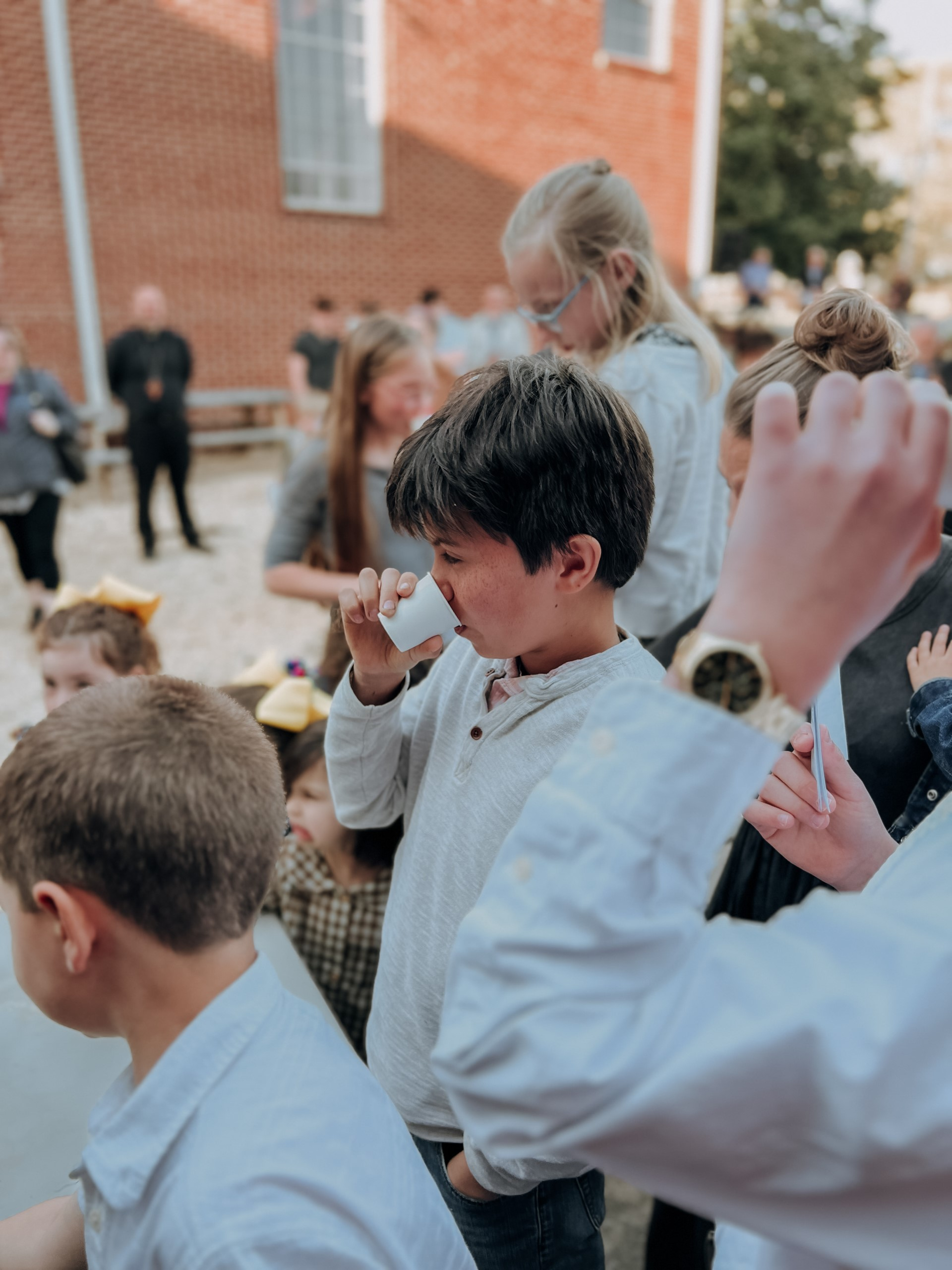
This is traditionally when the Stations liturgy mentions Our Lord being thirsty and His being given vinegar to drink, so it was here that the children had the (dis)pleasure of smelling and — for the brave — even drinking a bit of apple cider vinegar. Fr. Tony helped them understand that since wine was the sign of the covenant, this made bad wine (which becomes vinegar) a kind of curse. By the end, they all agreed: a curse, indeed!
The Sixth Station: Jesus is Nailed to the Cross
The Lord of All could immediately remove Himself from the Cross, call legions of angels to His aid, but chose rather to remain nailed to His wooden throne. The children were able to feel the nails, touching them to their hands and wrists.
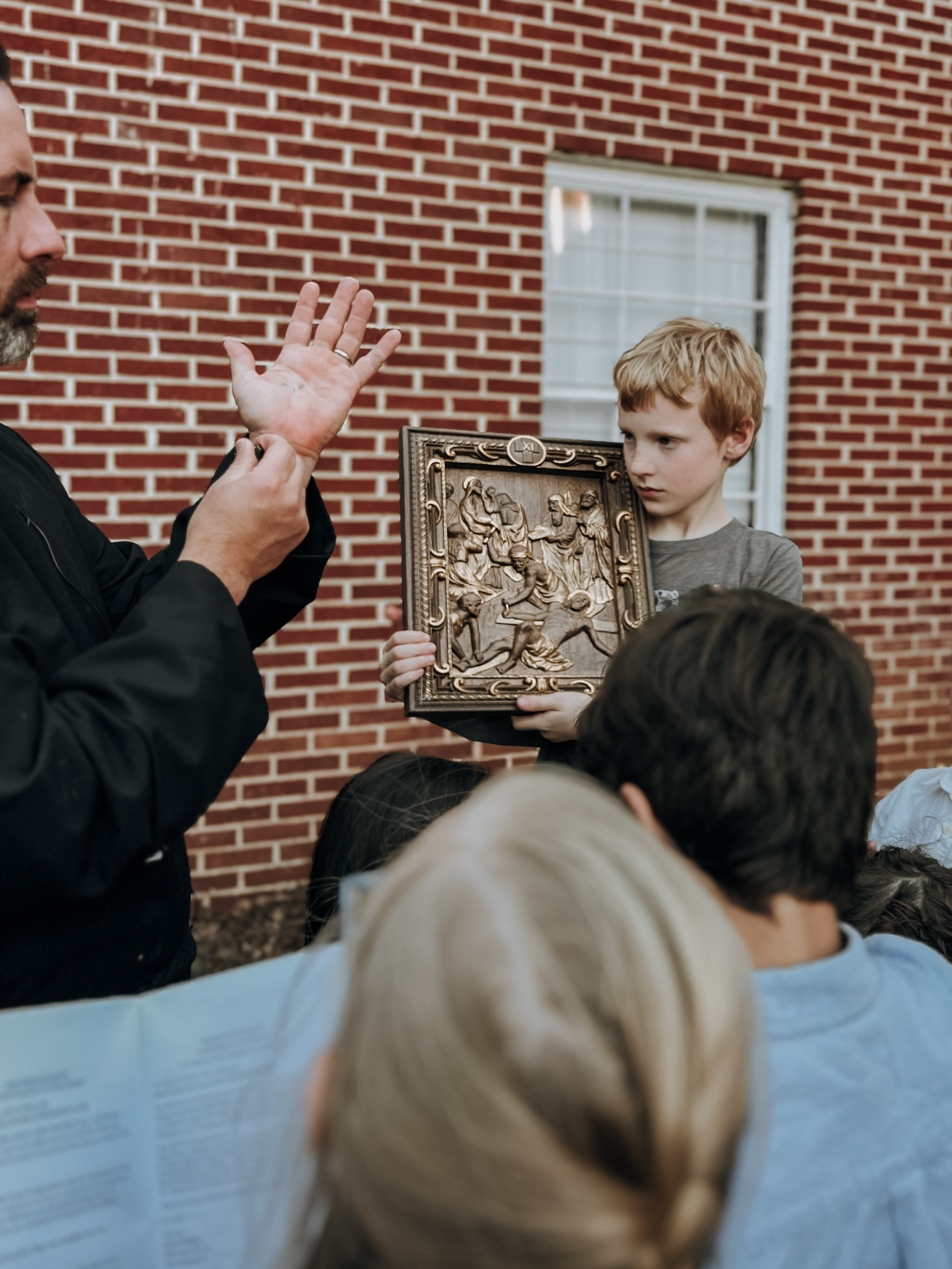

The Seventh Station: Jesus Dies on the Cross
When our Lord died, the earth trembled and the sky went dark, and the sound of the temple curtain being rent in two could be heard. The children felt how difficult it was to tear a cloth in pieces, then imagined a curtain far thicker, far bigger, far heavier being torn.
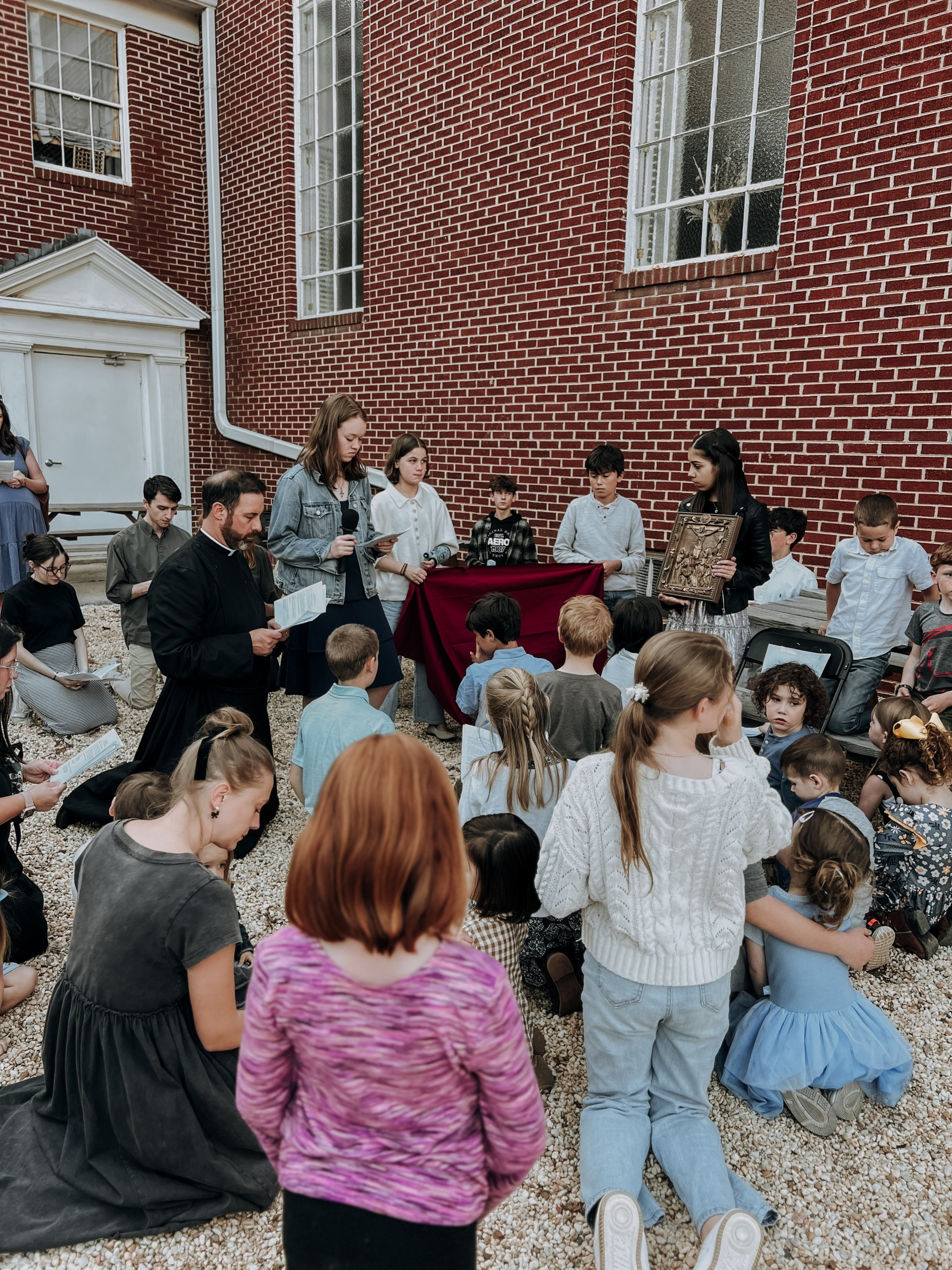
The Eighth Station: Jesus is Laid in the Tomb
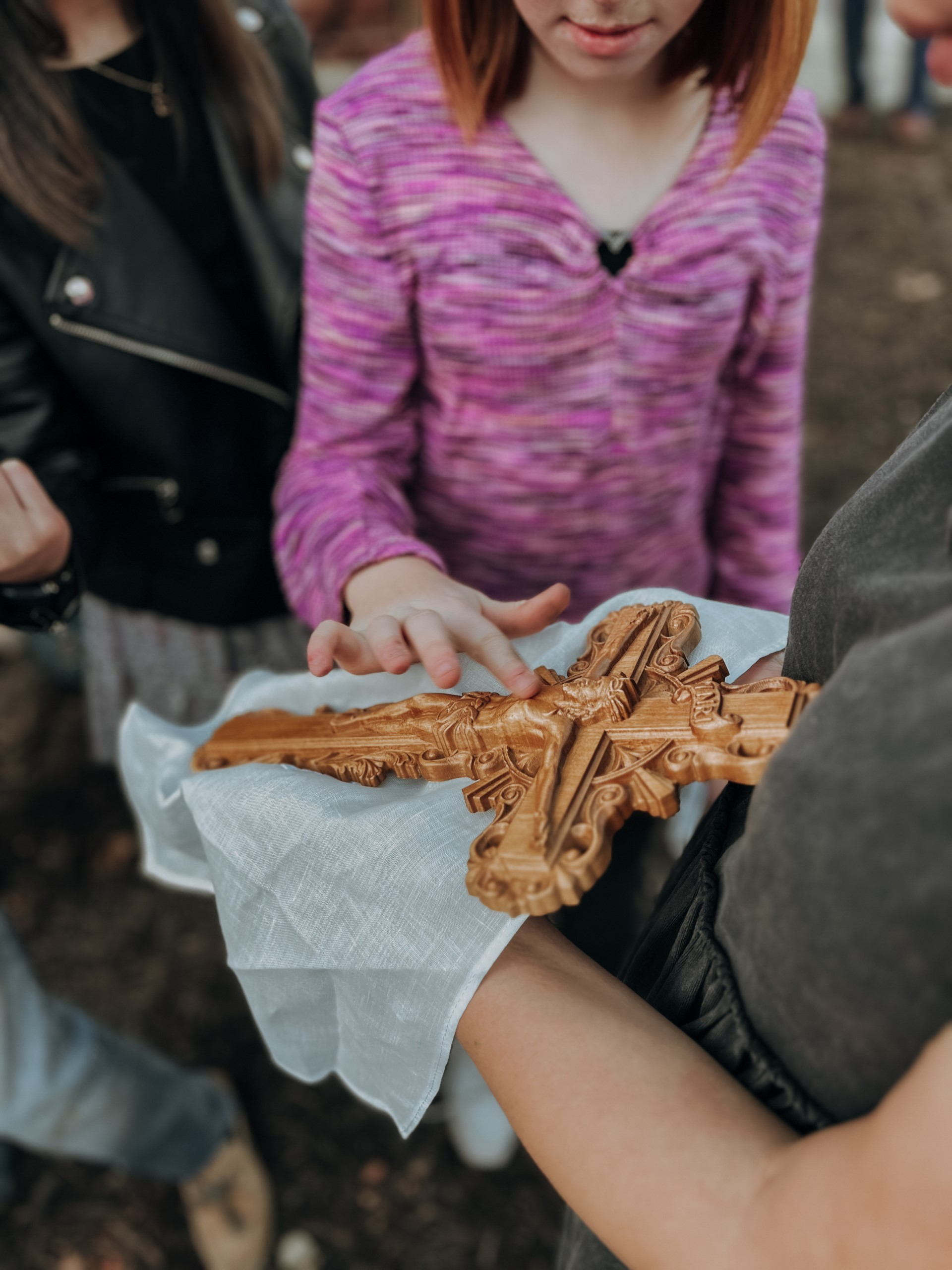
Finally, the children were taught about the preparation of a dead body, the myrrh oil that would have been used, and had the opportunity to both smell and feel the oil. They each got the chance rub myrrh on the crucifix before wrapping it in a clean linen, placing it in a box, and burying it in a sepulcher, which was then covered by a large slab of stone by an adult.
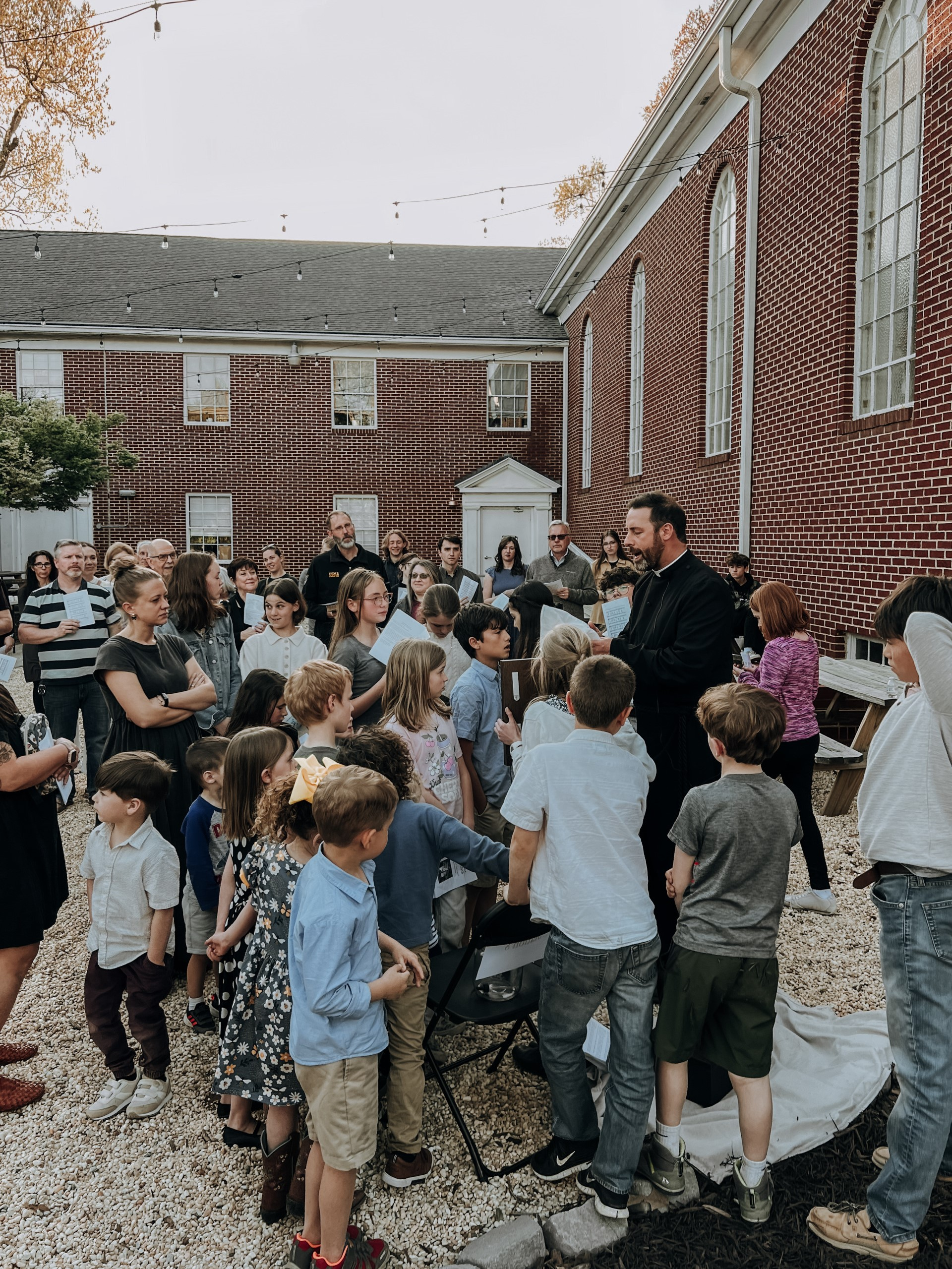


On Easter morning before service, the sepulcher was opened and in the box was found not a crucifix with Our Lord's body, but neatly folded linens (purificators). Flowers were found in the empty box to show that what the enemy uses to make us fear is used by God to bring forth surpassing beauty. Life from death!
“For, all arise, from Christ arising from the dead.”
Conclusion and Resources
I hope this is helpful for those that are considering making this iteration of the Stations of the Cross devotion a part of their annual Lenten observance.
My thanks are owed to our parish’s Director of Community, Karisa Hughes, for putting so much care into making this service a wonderfully inviting time of worship for our children. Including children is something I think our church does particularly well. Also, thank you to Fr. Tony Melton for teaching our children with such love and for the well-crafted prompts for the adults, which imbued a prayerful, reverent spirit throughout the service. Finally, thank you to my wife, Kayla Marshall, for photographing these moments — we didn’t know that three years on they’d be used to help others!
